One workspace for the whole loop
Chat, edit, inspect source control, run terminals, review files, and coordinate agents without moving the project into a hosted workspace.
Projects · threads · editor · terminalsLocal-first desktop workspace
ADDOM brings multiple providers, guarded tools, an integrated editor, memory, and delegated agents into one desktop workspace. Your projects stay local.
winget install --id 9N3MG7BJRSRB --exact --source msstorev0.1.2-alpha · Signed and updated by Microsoft Store · MIT licensed
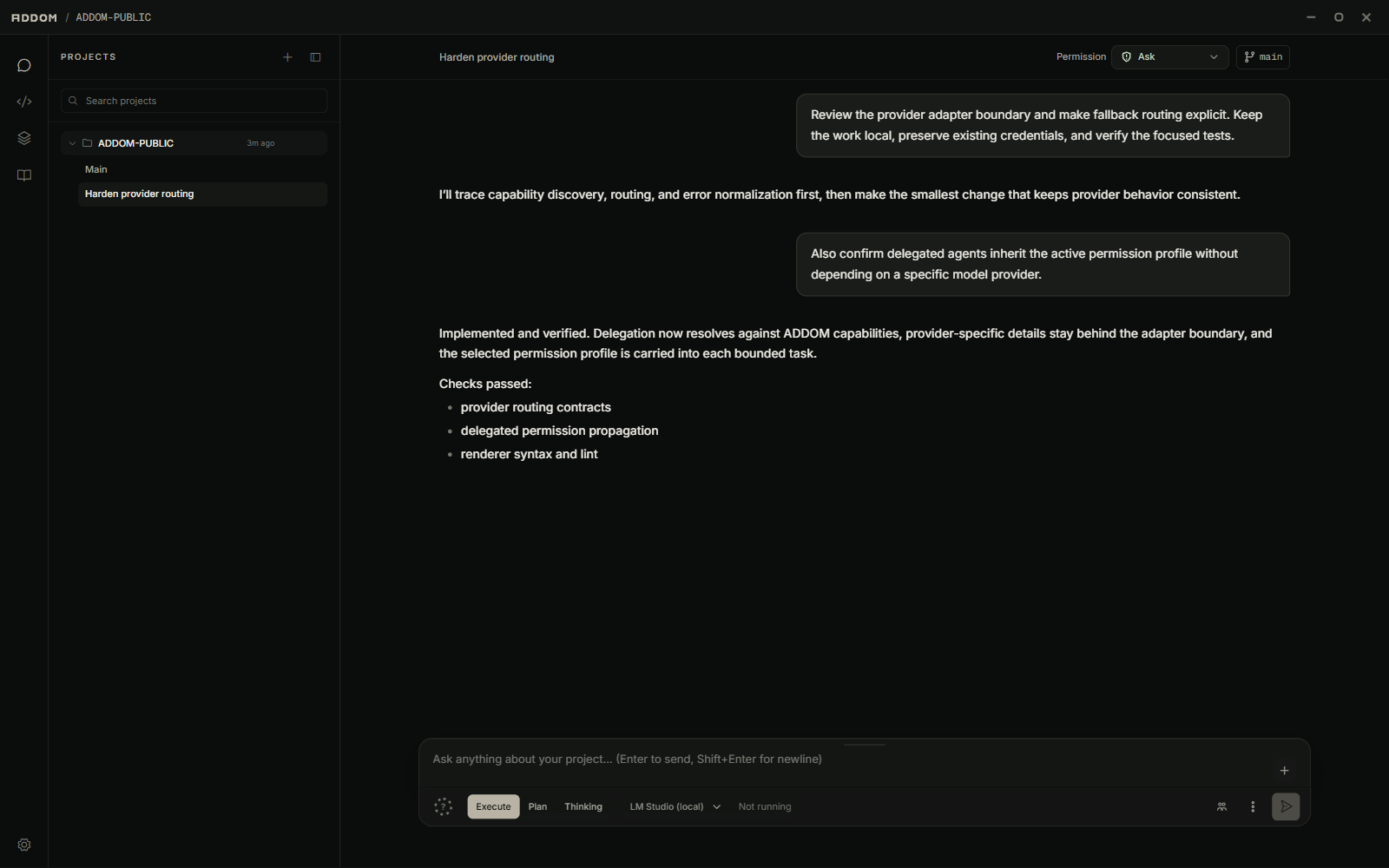
A complete working surface
ADDOM is built around the repository, the evidence, and the decisions that move real work forward—not around isolated prompt sessions.
Chat, edit, inspect source control, run terminals, review files, and coordinate agents without moving the project into a hosted workspace.
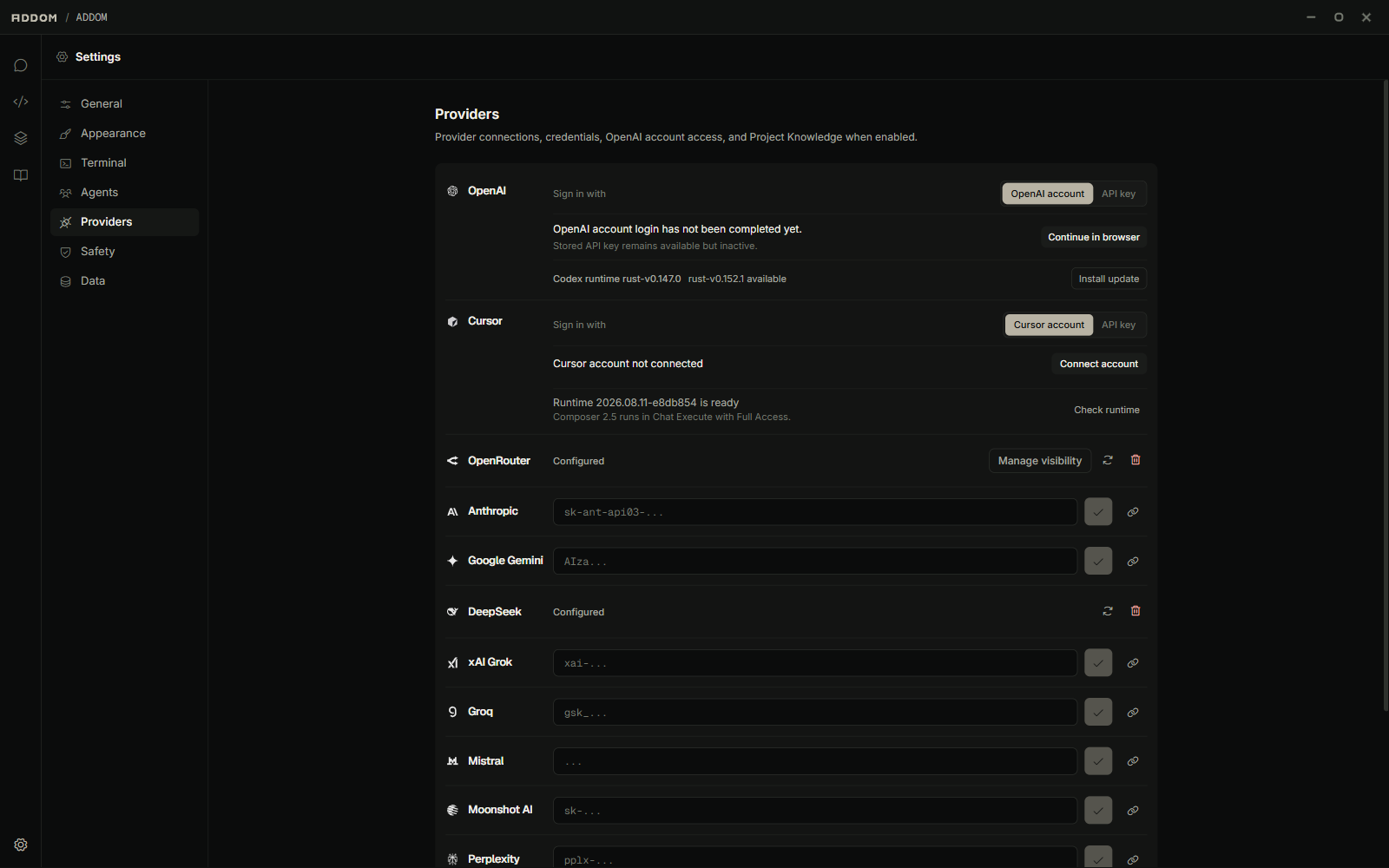
Projects · threads · editor · terminalsUse OpenAI, Anthropic, Google, OpenRouter, and other supported providers from a common workspace instead of committing the project to one model path.
Provider choice · per-thread modelsPermission modes, tool approvals, execution evidence, and review surfaces keep machine-side work inspectable while letting you decide how much the system may do.
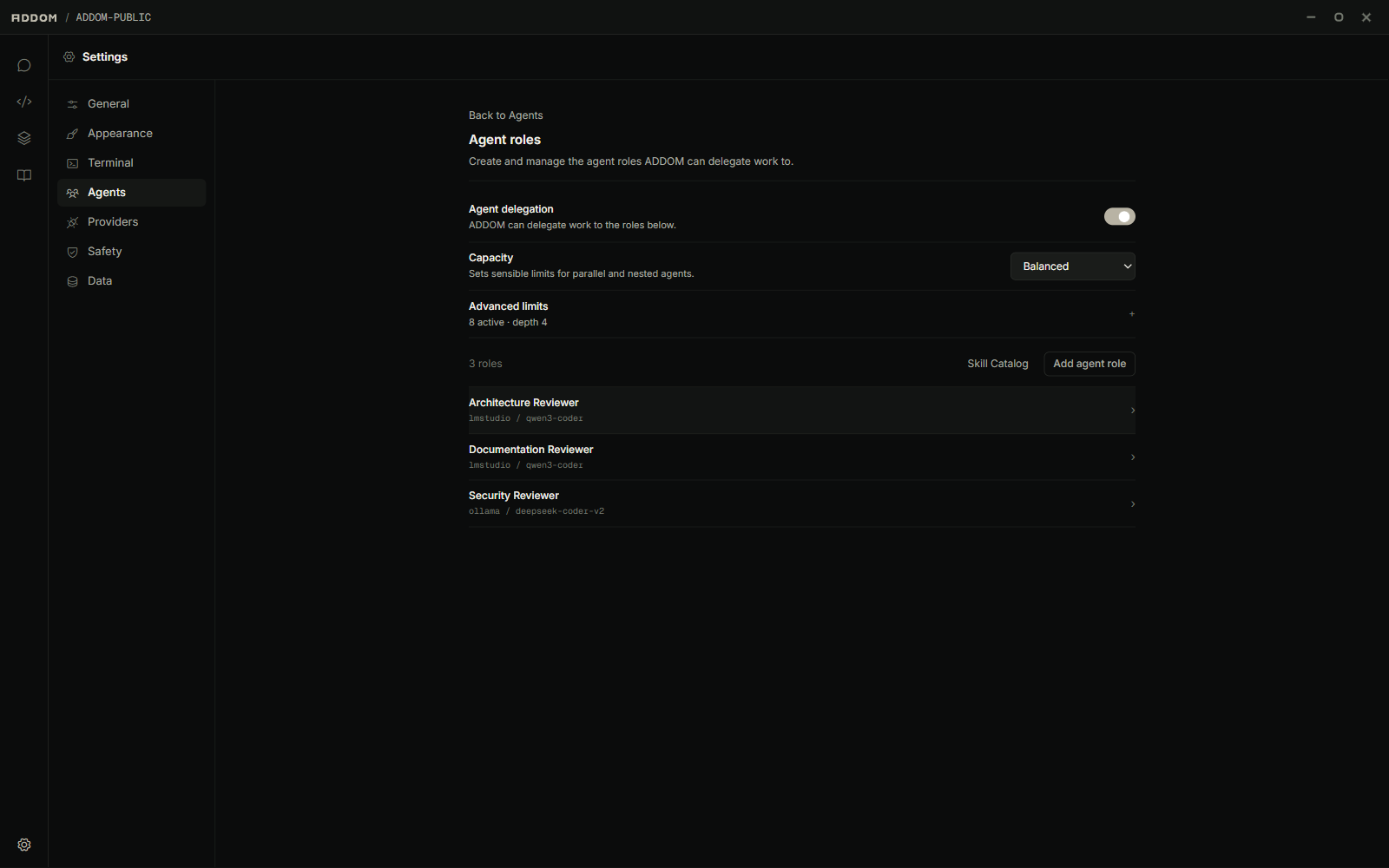
Permissions · approvals · evidenceCreate agent roles with their own provider, model, skills, and working scope. ADDOM routes bounded tasks and brings their results back into the parent workflow.
Roles · routing · parallel workThe real product
The website uses the actual application—not speculative mockups—to show how conversation, code, providers, and agents fit together.
Assign each role its own provider, model, skills, and working scope before ADDOM routes bounded tasks.
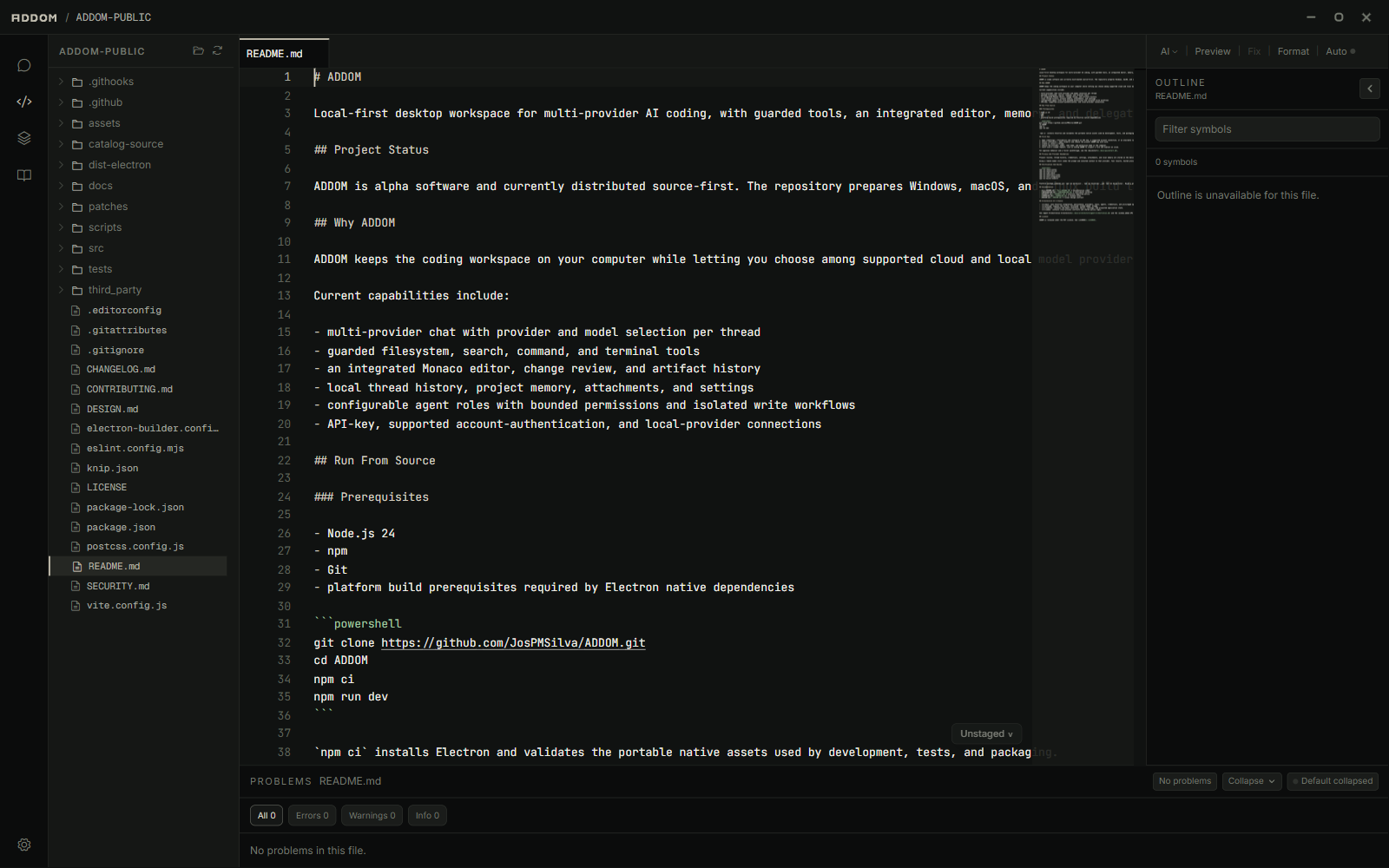
The integrated editor, source control, terminal sessions, and file review keep implementation evidence next to the conversation that produced it.
Configure supported providers once, select providers and models per thread, and use OpenRouter visibility without reshaping the workspace around one vendor.
Local by product shape
Projects, settings, and continuity remain anchored to the device. A remote boundary appears only when you deliberately choose a configured service.
Read the privacy boundaryStored locally with the desktop workspace.
Saved on-device and used only for the provider path you configure.
No analytics SDK, behavioral tracking, or developer data collection.
Requests go to the selected provider when you choose a remote model.
Alpha, stated plainly
Kept honest on purpose. ADDOM is developed in the open by one person, and the current alpha is available as a packaged download or as source you can inspect and build.
From the developer
I built ADDOM alone over six months because I wanted an AI coding workspace I could actually trust on my own machine — one that shows its boundaries instead of asking for faith. It is written with AI assistance and held to the standard any code should be: tests, a written threat model, and everything open to inspection. If something breaks, tell me — I read every issue.
1 developer · 4,200+ integration tests · 15 locale variants · 0 telemetry
Open source · MIT
Download the alpha, inspect the source, follow development, or report issues on GitHub.